
Dryer Vent Cleaning in Indianapolis, IN
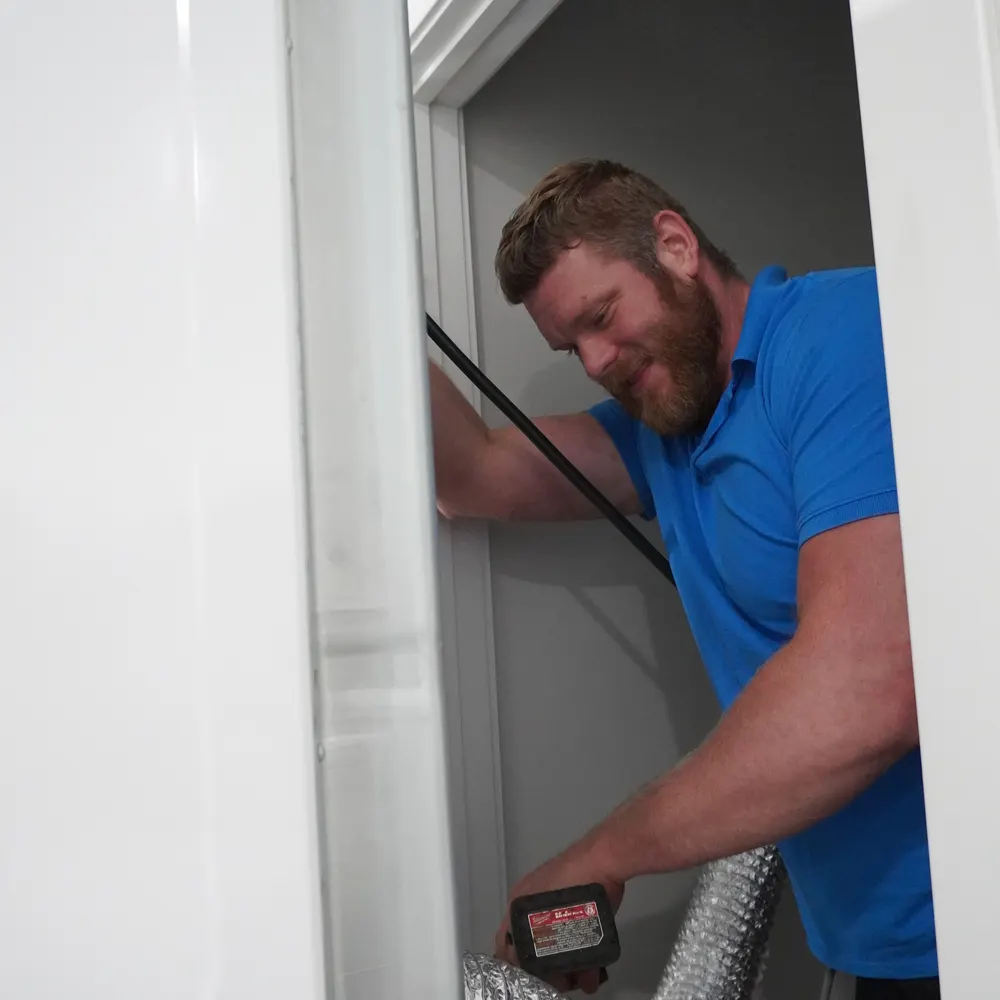
A dryer that's slow to dry, running hotter than normal, or leaving the outside vent hood barely moving air is telling you the exhaust duct is restricted. A packed dryer vent is a real fire risk and it wastes energy every single load. Nate clears the full run, not just what's reachable from the back of the machine.
Lint Buildup Is a Real Fire Risk
Lint is dry, fine, and burns easily. When it packs into the dryer's exhaust duct instead of leaving the house, it sits right next to a heat source every time you run a load. We're not going to throw a scary statistic at you, since we don't have one to back up, but the basic physics is straightforward: restricted airflow plus heat plus a flammable material is a combination worth taking seriously, not ignoring for another year.
Beyond the Fire Risk, It's Also Costing You
A restricted vent makes the dryer work harder and longer for the same load of laundry, which shortens the life of the heating element and drive motor and adds to your utility bill. Clearing it is a quick, affordable way to protect the appliance you already own.
How to Tell Before It Becomes a Bigger Problem
Clothes Take Two or More Cycles
If a normal load used to take one cycle and now regularly needs a second, that's a strong sign of restricted airflow.
Dryer Runs Hot to the Touch
The top or front panel feeling unusually hot during a cycle often means exhaust air isn't escaping the way it should.
Weak Airflow at the Outside Vent Hood
With the dryer running, the exterior flap should visibly move with strong airflow. Barely-there movement means a blockage.
Musty Smell or Visible Lint Near the Duct
Lint escaping around duct connections, or a musty smell, both point to a duct run that isn't clear.
It's Been a Year or More
If you can't remember the last time the full vent run was cleaned (not just the lint trap), it's due.
Long, Winding, or Long-Run Ducting
Homes with a dryer far from an exterior wall, or with several bends in the duct, clog faster and benefit from more frequent cleaning.
A Full-Run Cleaning, Not Just the First Few Feet
Inspect
Check the Full Duct Run
From the back of the dryer to the exterior vent hood, including bends and transitions where lint likes to pack in.
Clear
Remove the Buildup
We clean out the lint and debris along the entire run, not just what's visible from the machine.
Verify
Confirm Airflow
We test airflow at the exterior vent hood so you can see the difference before we leave.
Report
Tell You What We Found
If the vent material or routing itself is a problem (crushed flex duct, too many bends), we'll tell you honestly, even if it's outside the cleaning itself.
Vent Cleaning vs. Dryer Repair
A restricted vent and a failing dryer part can look identical from the laundry room: long dry times, a hot-running machine, clothes that come out damp. If Nate finds that the airflow is clear and the vent isn't the issue, we'll tell you straight and point you to what's actually wrong with the machine on our dryer repair page. No guessing games, and no charging for a cleaning you don't need.
Dryer Vent Cleaning FAQ
Roughly once a year for most households, sooner for larger families doing frequent loads, homes with long or winding duct runs, or if you're already seeing long dry times or a hot-running dryer.
Yes, in principle. Lint is highly flammable and, when it builds up around a heat source with restricted airflow, that's not a combination to leave unaddressed. We're not going to quote you a made-up statistic, but the basic physics of it is straightforward enough that we take it seriously and recommend homeowners do the same.
It can be either, and sometimes both. We check the vent airflow first since it's the more common cause and the cheaper fix; if the vent is clear, we'll move on to checking the heating element, thermostat, or airflow inside the machine itself. See our dryer repair page for the appliance side of it.
The whole duct run, from the back of the dryer to the exterior vent hood. Cleaning just the trap or the first few feet doesn't address a blockage further down the line.
The visit starts with our standard $95 diagnostic fee, which covers the inspection and airflow check. If cleaning or repair work is needed, you'll get a clear price before we do anything further, and the $95 applies toward that cost. If you decide not to move forward, the $95 still covers the inspection.
Keep the Laundry Room Safe and Running
Serving Greenwood, Plainfield, Avon, Carmel, Fishers and the rest of the Indianapolis area.
Where to Next?
A few places Indianapolis homeowners look next.
Ready to Clear the Vent and Cut the Risk?
Call, text, or send a few details below. We'll respond within 30 minutes with an honest plan.
Prefer to text? (317) 721-3769